Mastering Realism with Smashed Glasses Textures Brushes
In the world of digital design and photo manipulation, authenticity is often the dividing line between a good composition and a breathtaking one. Whether you are creating a gritty poster for a thriller movie, designing packaging for a premium spirit brand, or adding dramatic effects to a digital illustration, the texture of broken glass carries significant visual weight. However, sourcing high-quality, realistic glass textures can be a frustrating endeavor. Many free resources online offer low-resolution images that pixelate when scaled, or worse, they look obviously artificial because they were generated entirely by software rather than captured from reality. This is where Smashed Glasses Textures Brushes steps in as a comprehensive solution for designers who refuse to compromise on quality.
The Challenge of Digital Realism
Designers frequently encounter a specific set of challenges when attempting to incorporate shattered glass into their work. The primary issue is lighting and refraction. Glass is transparent, reflective, and refractive all at once. When it breaks, it creates thousands of unique shards, each catching light differently. Simulating this manually using standard digital painting tools is incredibly time-consuming and often yields flat, unconvincing results. Furthermore, stock photography sites may have generic images, but they rarely provide the flexibility needed for complex compositing. You might find a photo of a broken window, but not the specific pattern of shards you need for your layout, forcing you to spend hours masking and editing.
Another common pain point is resolution. A texture that looks sharp on a web banner may become blurry and unusable when applied to a large-format print or a high-definition display. Designers need assets that can withstand heavy cropping and scaling without losing detail. This is precisely the gap that Smashed Glasses Textures aims to fill, offering a bridge between photographic reality and digital flexibility.
A Hybrid Approach: Real Glass Meets Digital Precision
What sets this collection apart is its origin story. Unlike purely synthetic brush sets, the core of this pack is derived from real glass that has been physically smashed and photographed. These raw captures are then enhanced with advanced digital tools to ensure maximum usability. This hybrid approach ensures that every crack, shard, and reflection retains the chaotic beauty of actual physics while being optimized for graphic design workflows. The result is a set of textures that feel organic and unpredictable, avoiding the repetitive patterns that plague algorithmically generated brushes.
The Smashed Glasses Textures Brushes package is designed to be versatile. It is not just a folder of images; it is a toolkit. By including both high-resolution JPEG textures and specialized brushes for industry-standard software like Photoshop and Procreate, it caters to a wide range of creative professionals. Whether you are a traditional illustrator moving into digital mediums or a seasoned photo retoucher, the tools provided allow for seamless integration into your existing pipeline.
Unpacking the Toolkit: What You Get
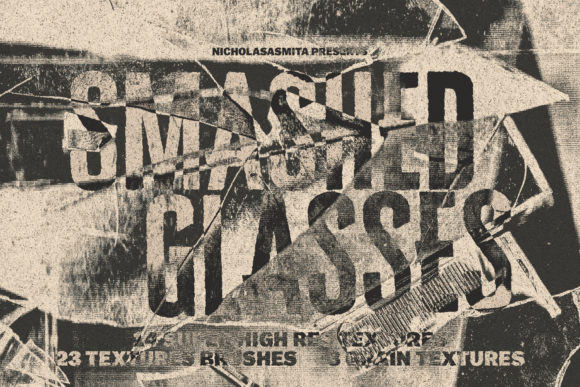
To understand the value proposition, it is helpful to look at the specific components included in the pack. The foundation of the set is the 14 Super High-Res JPG Textures. These are not small web-ready files; they are massive assets with the smallest width starting at 7400 pixels and the tallest reaching up to 20000 pixels. This extreme resolution means you can zoom in incredibly close to capture minute details of the fracture lines, or scale them down for subtle background overlays without any loss in clarity. For print designers, this DPI headroom is invaluable, ensuring crisp output even on large posters or billboards.
Complementing the static textures are 23 Smashed Glass Brushes, compatible with both Photoshop 2020 and Procreate 5. These brushes are engineered to mimic the scattering effect of glass shards. Instead of painting a solid shape, you can stamp or drag these brushes to create natural-looking clusters of debris. This is particularly useful for adding foreground elements to a scene, such as glass flying toward the viewer after an impact. The inclusion of Procreate support is a significant bonus for iPad users, allowing for on-the-go creation with the same level of fidelity found in desktop applications.
Additionally, the pack includes 3 extra Grain textures with varying intensities. While seemingly minor, these grain overlays are crucial for blending. When you composite a sharp, high-contrast glass texture onto a softer photograph, it can sometimes look "pasted on." Applying a subtle grain helps unify the noise levels of the different layers, making the glass appear as if it was genuinely part of the original scene.
Practical Applications for Designers
The utility of Smashed Glasses Textures Brushes extends across multiple industries. For graphic designers working in advertising, these textures can add edge and intensity to product launches. Imagine a perfume bottle ad where the background features a subtle, elegant shatter pattern, suggesting boldness and disruption. The high-resolution textures allow for precise masking, so you can place the glass effect behind the product without obscuring key details.
For digital artists and concept creators, the brushes offer a dynamic way to depict action. In comic book art or storyboard illustrations, conveying the violence of an impact is essential. Using the scattered shard brushes, an artist can quickly build up a sense of motion and danger around a character. Because the brushes are based on real photography, the shards have varied shapes and sizes, preventing the repetitive "stamp" look that often breaks immersion.
Web and UI designers can also benefit from these assets, particularly when creating dark-mode interfaces or gaming-related websites. A subtle cracked glass overlay on a button hover state or a hero section can add depth and tactile feedback to the user experience. The key here is moderation; using the lower-intensity grain textures combined with a faded glass layer can create a sophisticated, modern aesthetic without overwhelming the content.
Tailoring Your Workflow
Different users will approach Smashed Glasses Textures in different ways, depending on their end goals. A photographer might use the high-res JPGs primarily for compositing. They would import the texture, set the blending mode to "Screen" or "Lighten" to drop out the black background, and then mask out areas where the glass should interact with the subject. The high resolution allows them to warp and distort the texture to match the perspective of their photo perfectly.
Conversely, a digital painter using Procreate might rely more heavily on the brushes. They could use the shard brushes to paint broken windows in a landscape scene, varying the opacity and size to create depth. The ability to switch between brushes and textures within the same ecosystem allows for a fluid creative process. You might start with a broad texture for the background and then use the brushes to add specific, detailed cracks in the foreground where the viewer’s eye is drawn.
Making the Most of Your Assets
To get the best results from this pack, consider the lighting in your main composition. Since the textures are derived from real glass, they have inherent highlights and shadows. Try to match the direction of light in your design with the highlights in the glass texture. If your scene is lit from the left, ensure the glass shards reflect light from that same direction. You may need to rotate or flip the textures to achieve this alignment.
Also, do not underestimate the power of color grading. While the textures are realistic, they may not always match the color palette of your project. Use adjustment layers to tint the glass. A cool blue tint can make the glass feel icy and cold, while a warm amber tone can suggest aged or dirty glass. The included grain textures are excellent for finalizing this look, helping the colored glass sit naturally within the environment.
In conclusion, Smashed Glasses Textures Brushes offers a robust, professional-grade solution for anyone looking to add realistic breakage effects to their work. By combining the authenticity of real-world photography with the convenience of digital brushes and massive resolution, it saves time and elevates the quality of the final output. Whether you are printing a large format advertisement or illustrating a digital comic, this toolkit provides the flexibility and detail needed to bring your most shattering ideas to life.